
Laser Rangefinder Modules Guides
Practical guides for selecting, comparing and integrating
1535 nm laser rangefinder modules for OEM optical systems.
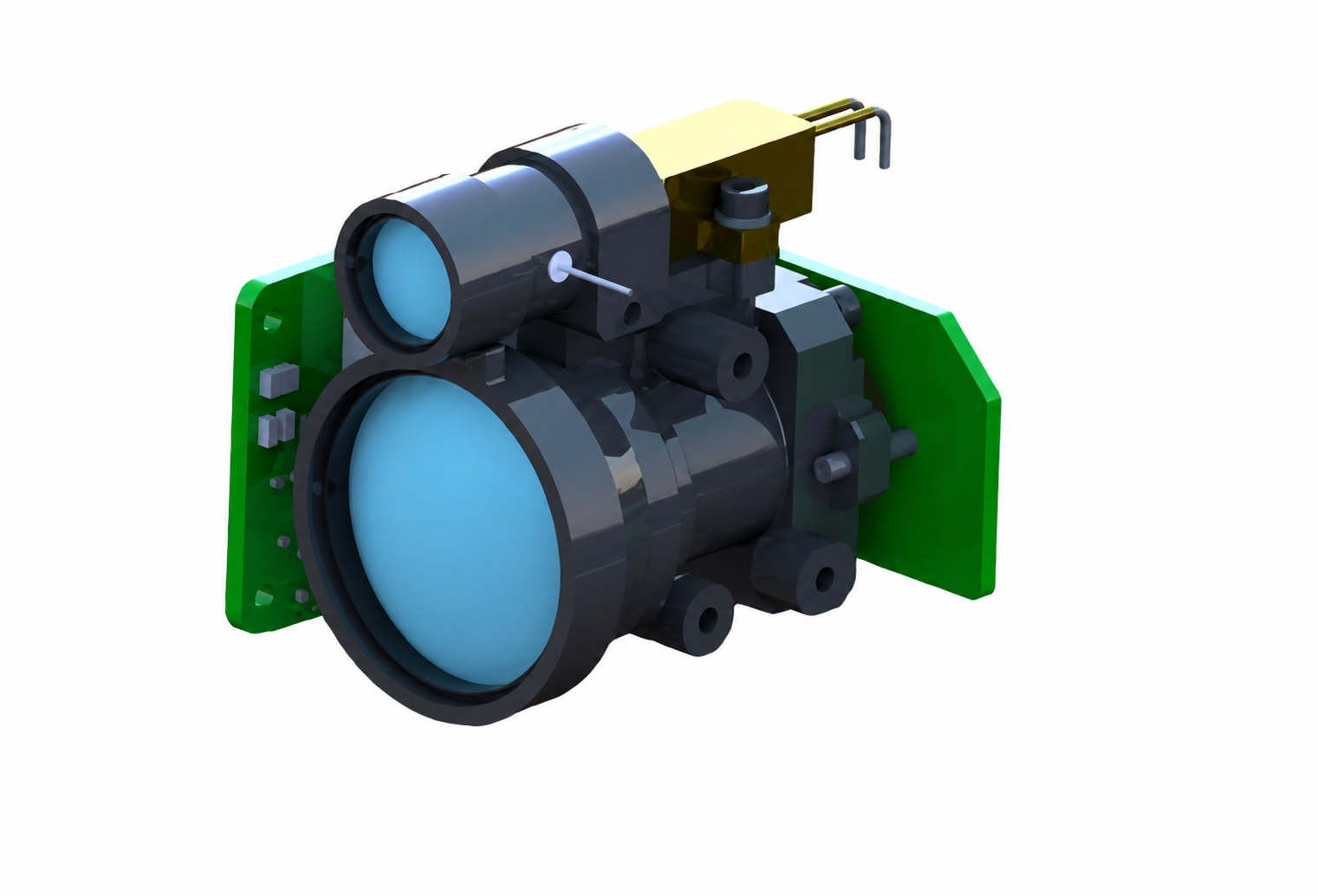
Integrating 1535nm Laser Rangefinders into C-UAS Tracking Systems
Radar and thermal cameras can detect rogue drones, but cueing effectors requires real-time 3D slant range. Discover why integrating high-repetition 1535nm eye-safe laser rangefinders into EO/IR gimbals delivers the sub-milliradian precision needed for tracking agile C-UAS targets.
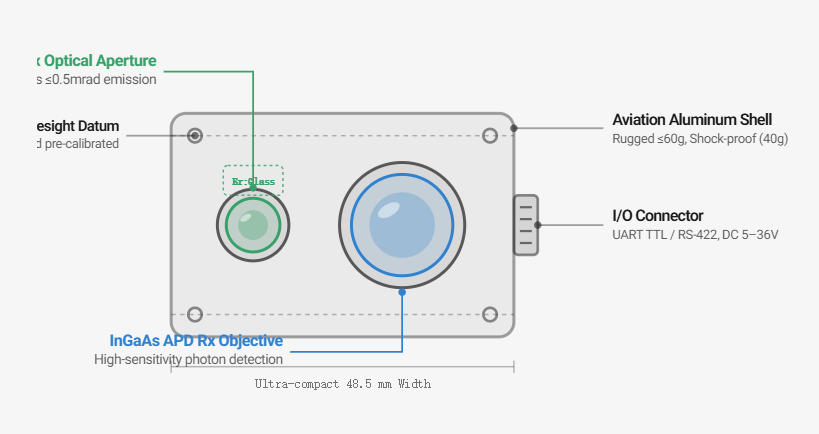
Class 1 Eye-Safe Certification for 1535nm Laser Rangefinders: IEC 60825 Explained
Discover the science and compliance behind Class 1 eye-safe 1535nm laser rangefinders under IEC 60825-1. Learn how corneal absorption eliminates retinal burn hazards, how MPE limits are calculated, and how Huanxin’s compact OEM modules balance multi-kilometer reach with strict ocular safety.
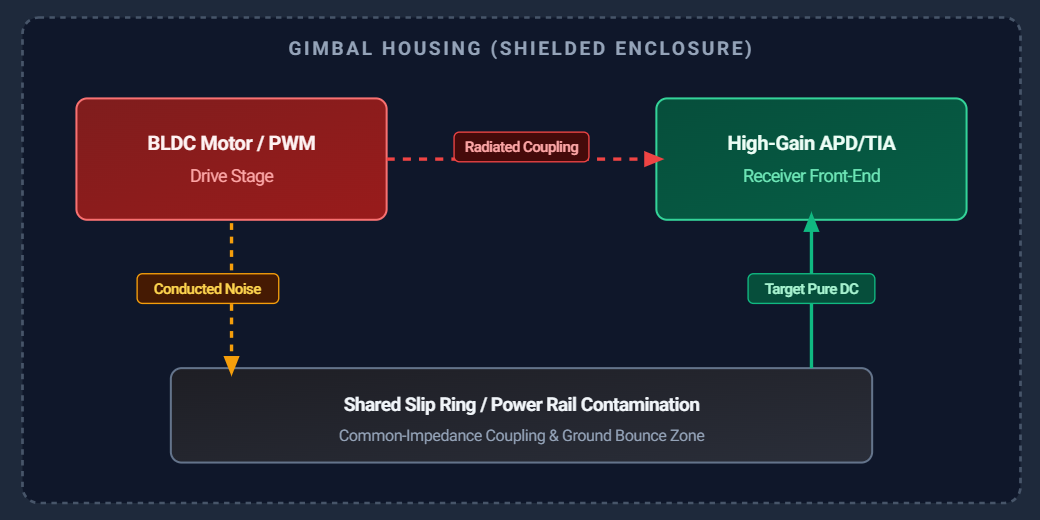
Mastering LRF Electrical Noise Suppression and EMI in Drone Gimbal Integration
Integrating high-repetition pulsed laser rangefinders into miniature drone gimbals often triggers phantom targets, range jitter, or signal loss once brushless motors spin up. This guide breaks down the root causes of PWM switching interference, APD power ripple degradation, and slip-ring crosstalk—delivering proven hardware solutions from multi-stage filtering and 360-degree shield bonding to custom optoelectronic payload integration.
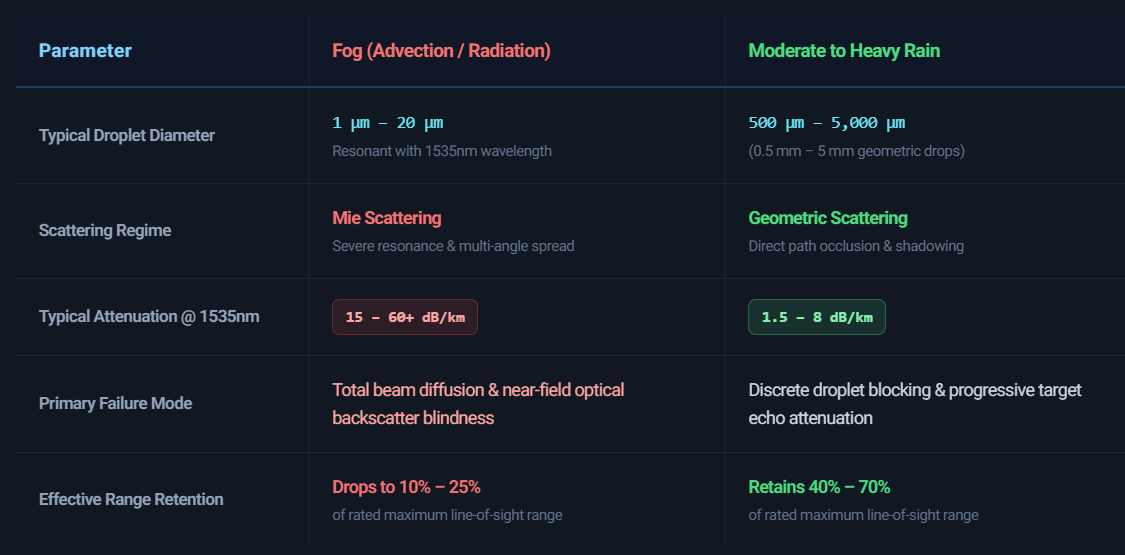
How Atmospheric Extinction, Fog, and Rain Impact 1535nm Laser Ranging Distance
Even rated for 10 km, why do laser rangefinders face sudden range drop-offs in bad weather? Explore how atmospheric extinction, Mie scattering in fog, and rain impact 1535nm SWIR pulses—and how range gating, multi-echo filtering, and high-energy erbium-glass modules restore critical link margins.
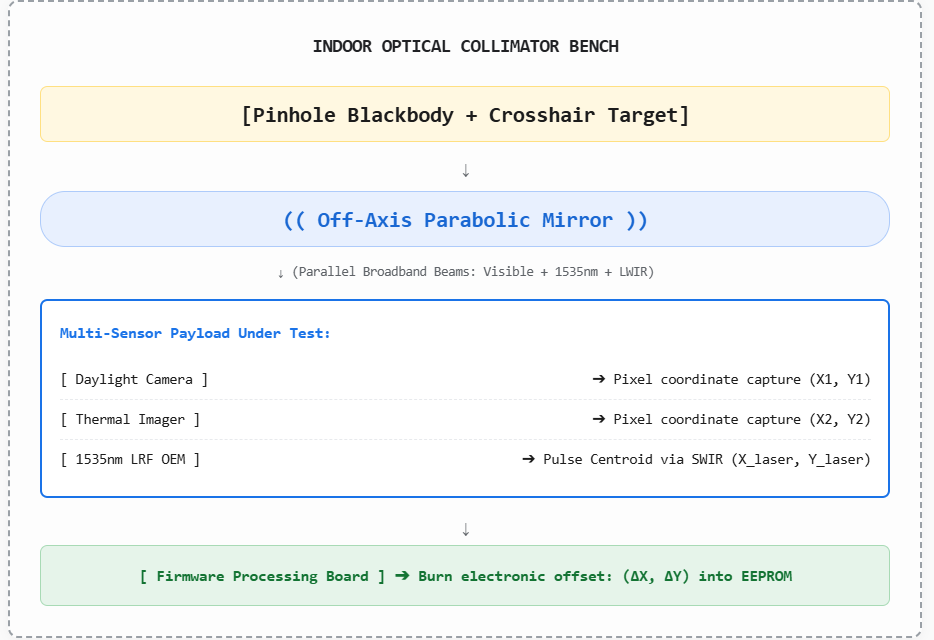
Boresighting a Laser Rangefinder with Thermal/Daylight Cameras: Methods & Tools
Ever hit the rangefinder trigger only to get zero readings or a wildly off-target return? When invisible 1535nm pulses drift away from your thermal or daylight crosshairs, even high-end EO/IR payloads fail. This engineering guide breaks down the core methods of boresighting laser rangefinders with thermal and visual channels—covering coaxial alignment, parallax correction, off-axis collimators, and field verification routines to keep your targeting spot locked dead center.
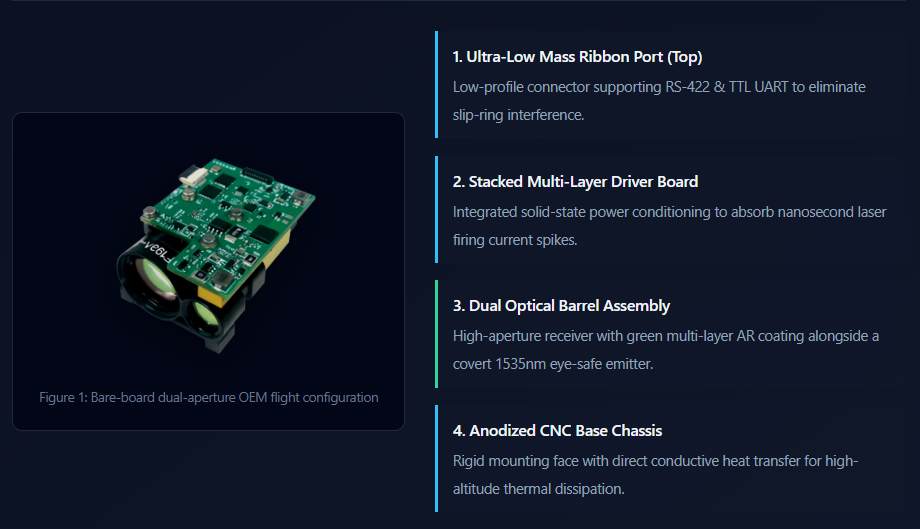
Integrating a Laser Rangefinder Module into Drone & UAV Gimbal Payloads: A Complete OEM Guide
Building a high-performance drone gimbal payload means balancing millimeter-scale space, strict weight limits, and sensor stability. Adding precision distance measurement turns basic aerial video into an actionable targeting tool. This OEM integration guide explores key wavelength trade-offs (905nm vs. 1535nm), sub-100g open-frame mechanical packaging, coaxial boresighting, and noise-free serial routing for multi-sensor UAV payloads.
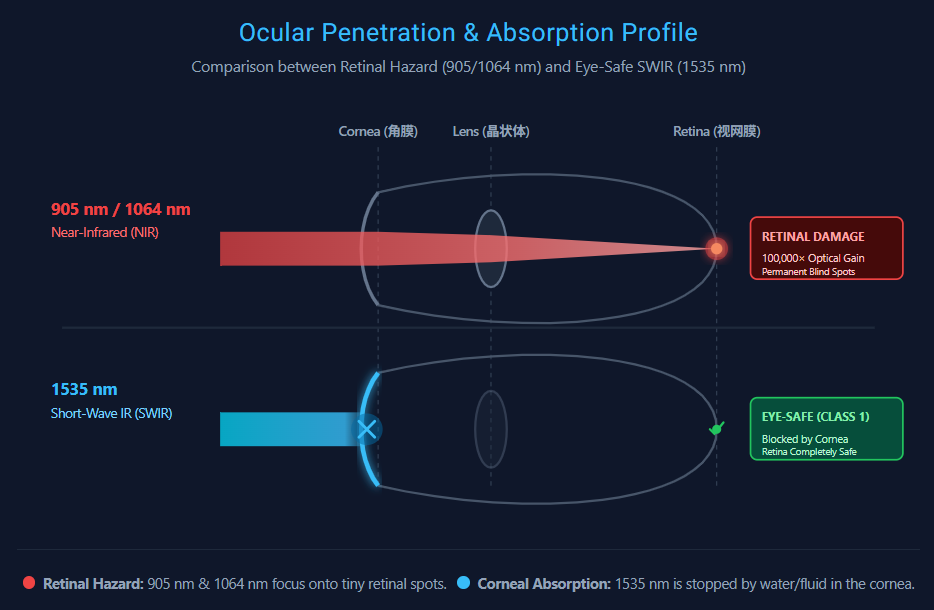
1535 nm vs 905 nm vs 1064 nm Laser Rangefinder: Which Wavelength Fits Your System?
Tired of 905 nm diodes washing out beyond the lab bench? Compare 905 nm, 1064 nm, and 1535 nm laser rangefinders across eye-safety limits, atmospheric scattering, beam divergence, and night-vision covertness to select the right OEM module for your optical payload.
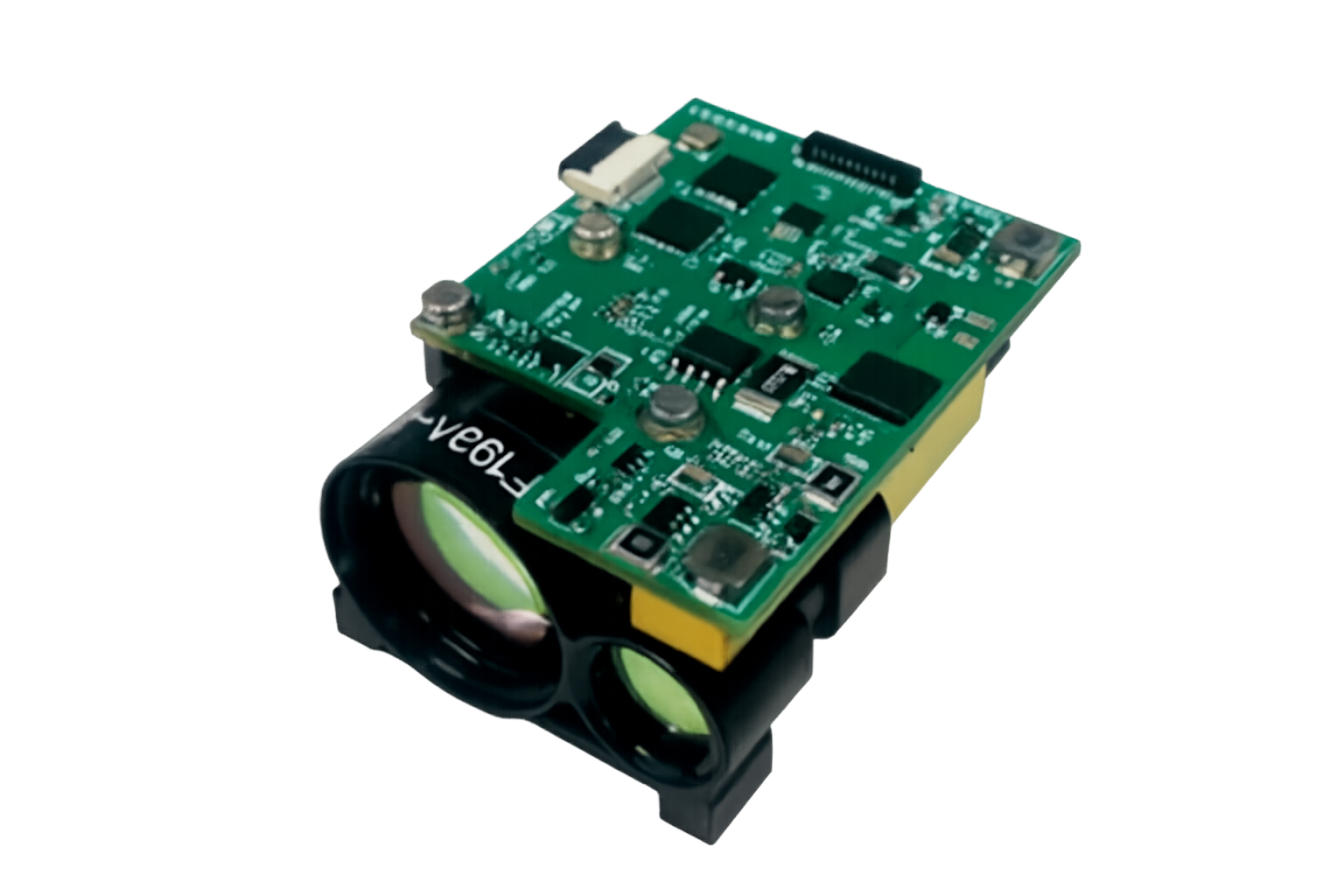
Laser Rangefinder Accuracy vs Resolution vs Ranging Success Rate
Laser rangefinder accuracy, resolution, and ranging success rate describe different parts of ranging performance. This guide explains how each metric works, what can affect real-world measurements, and how to read these specifications when selecting a 1535 nm laser rangefinder module.
How to Select a Laser Rangefinder Module for Handheld Optics
Learn how to choose a laser rangefinder module for handheld optics by balancing ranging distance, module size, weight, power supply, beam divergence, communication interface, and optical window requirements. This guide also explains what to consider when integrating compact 3 km and 4 km modules into binoculars, monoculars, thermal viewers, and other handheld optical devices.
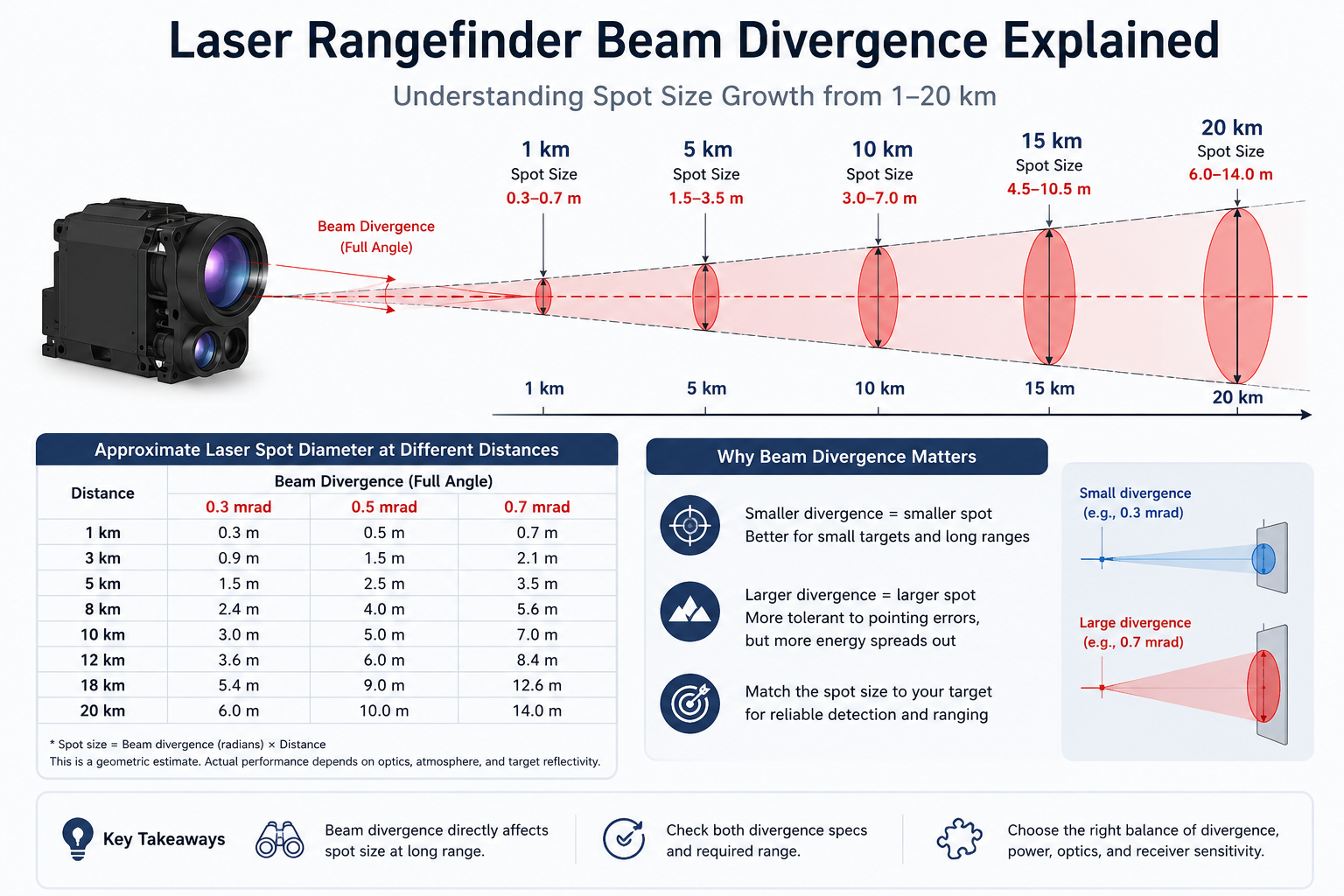
Laser Rangefinder Beam Divergence Explained: Spot Size at 1–20 km
Beam divergence may look like a small specification, but its effect grows quickly with distance. This guide explains how 0.3, 0.5, and 0.7 mrad beams change spot size from 1 to 20 km, how beam footprint relates to target size and pointing accuracy, and what to check when selecting a laser rangefinder module for OEM integration.
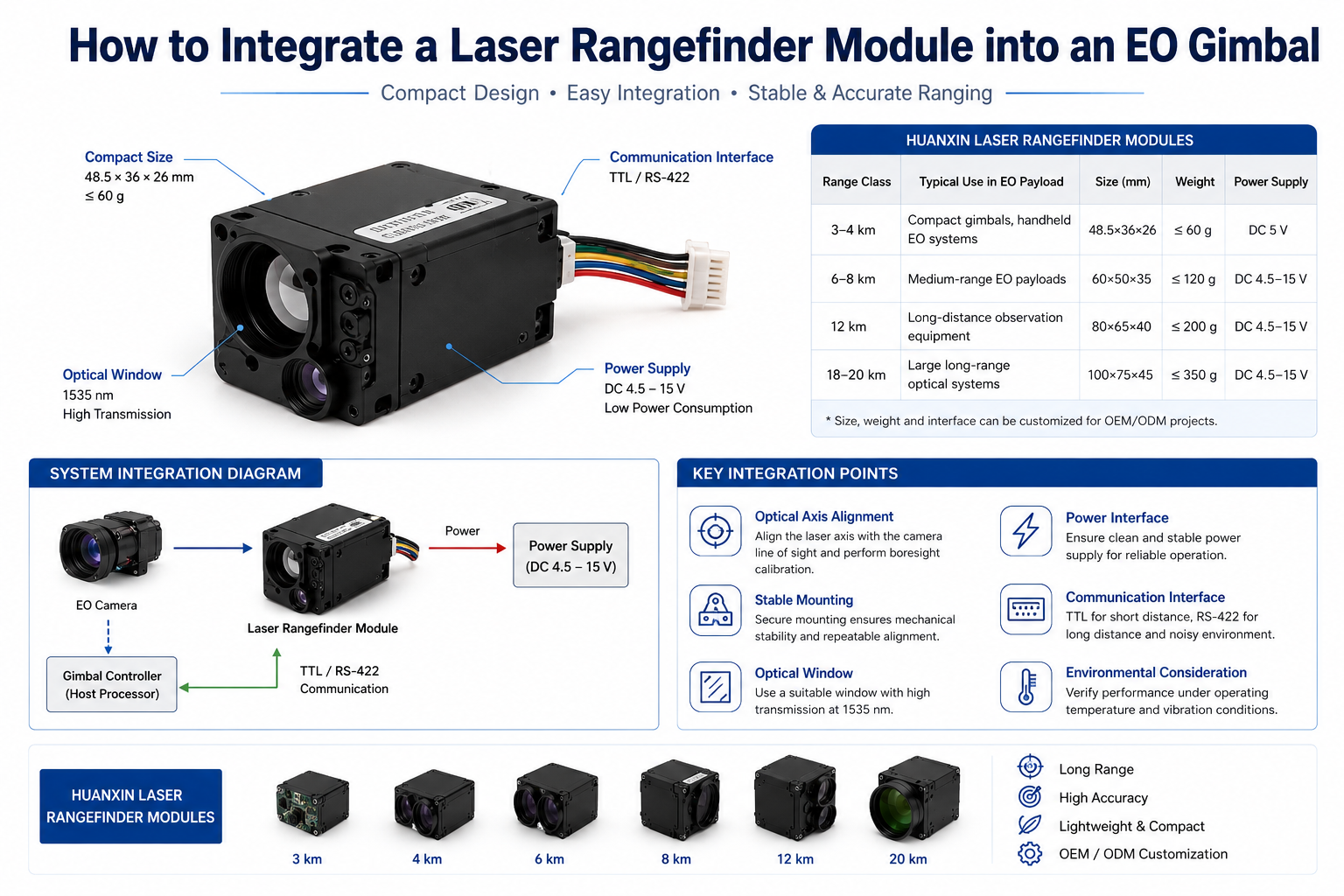
How to Integrate a Laser Rangefinder Module into an EO Gimbal
Learn how to integrate a laser rangefinder module into an EO gimbal, from mechanical mounting and optical axis alignment to power supply, TTL/RS-422 communication, optical window selection, and boresight setup. This guide also covers practical points for choosing a suitable LRF for compact and long-range EO payloads.
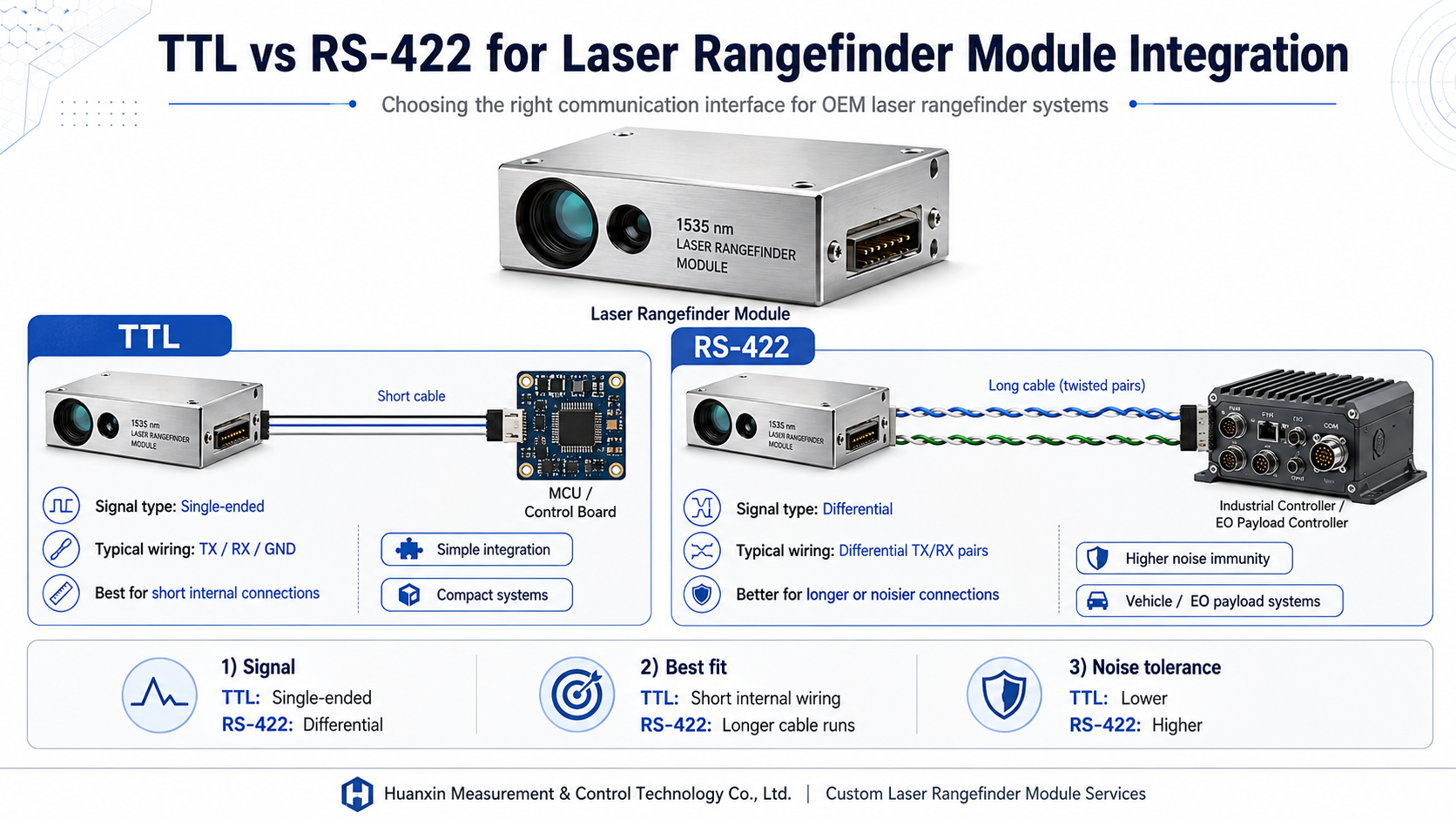
TTL vs RS-422 for Laser Rangefinder Module Integration
Choosing between TTL and RS-422 can affect the reliability of a laser rangefinder module once it is installed in real equipment. This guide explains the differences in wiring, cable length, noise resistance, logic levels, and typical applications to help OEM engineers select the right interface for compact optics, EO payloads, vehicles, and other systems.

1535 nm vs 905 nm Laser Rangefinder Modules: Which Should You Choose?
Compare 1535 nm and 905 nm laser rangefinder modules for OEM integration. This guide explains the differences in detector technology, ranging performance, laser safety considerations, system cost, optics, and application fit to help engineers choose the right wavelength for their system.
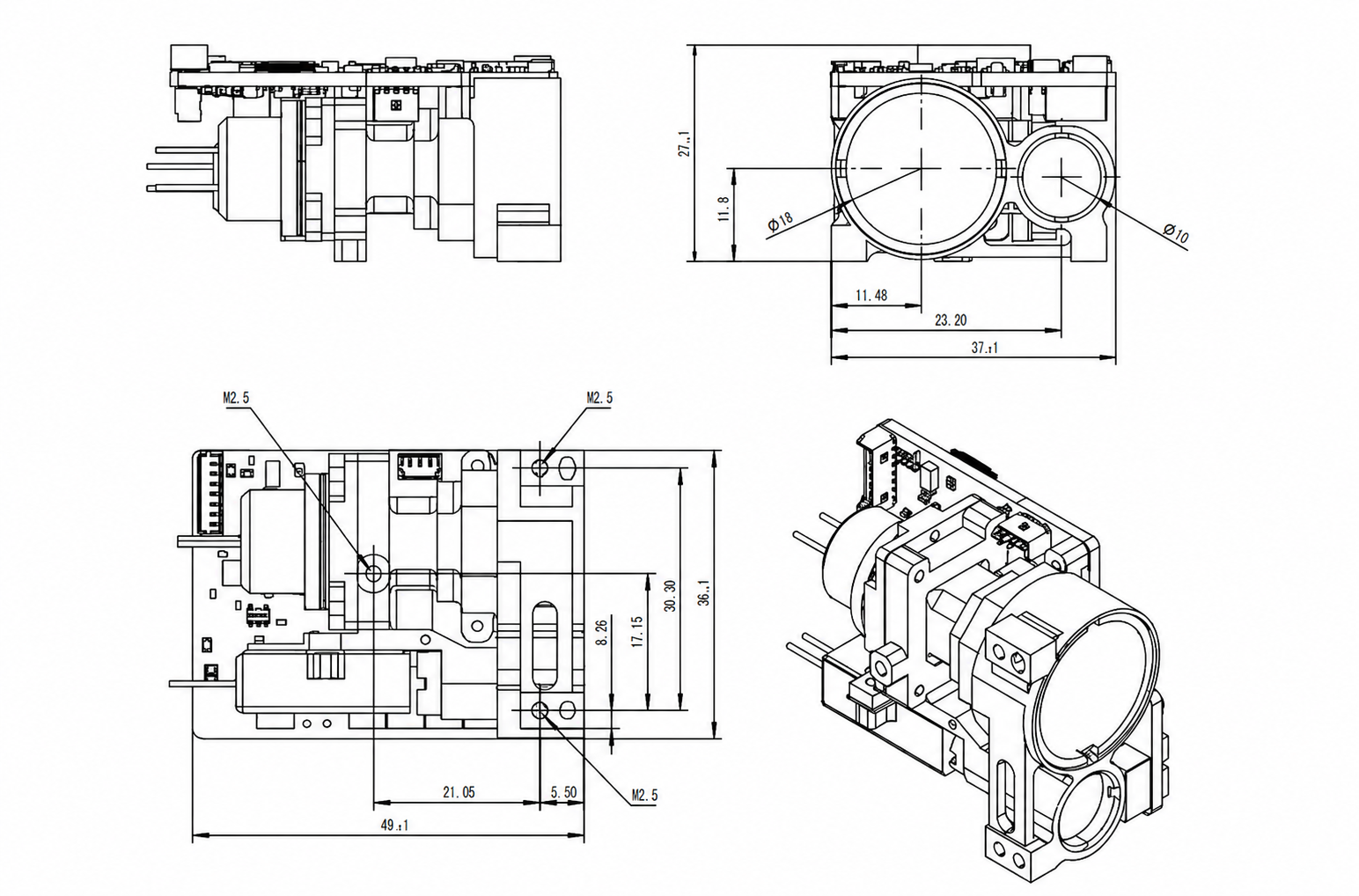
12 km vs 18 km vs 20 km Long Range Laser Rangefinder Modules
Compare 12 km, 18 km, and 20 km laser rangefinder modules by distance, beam divergence, power supply, weight, target type, and integration needs. Learn how to choose the right long-range option based on real working conditions rather than distance alone.
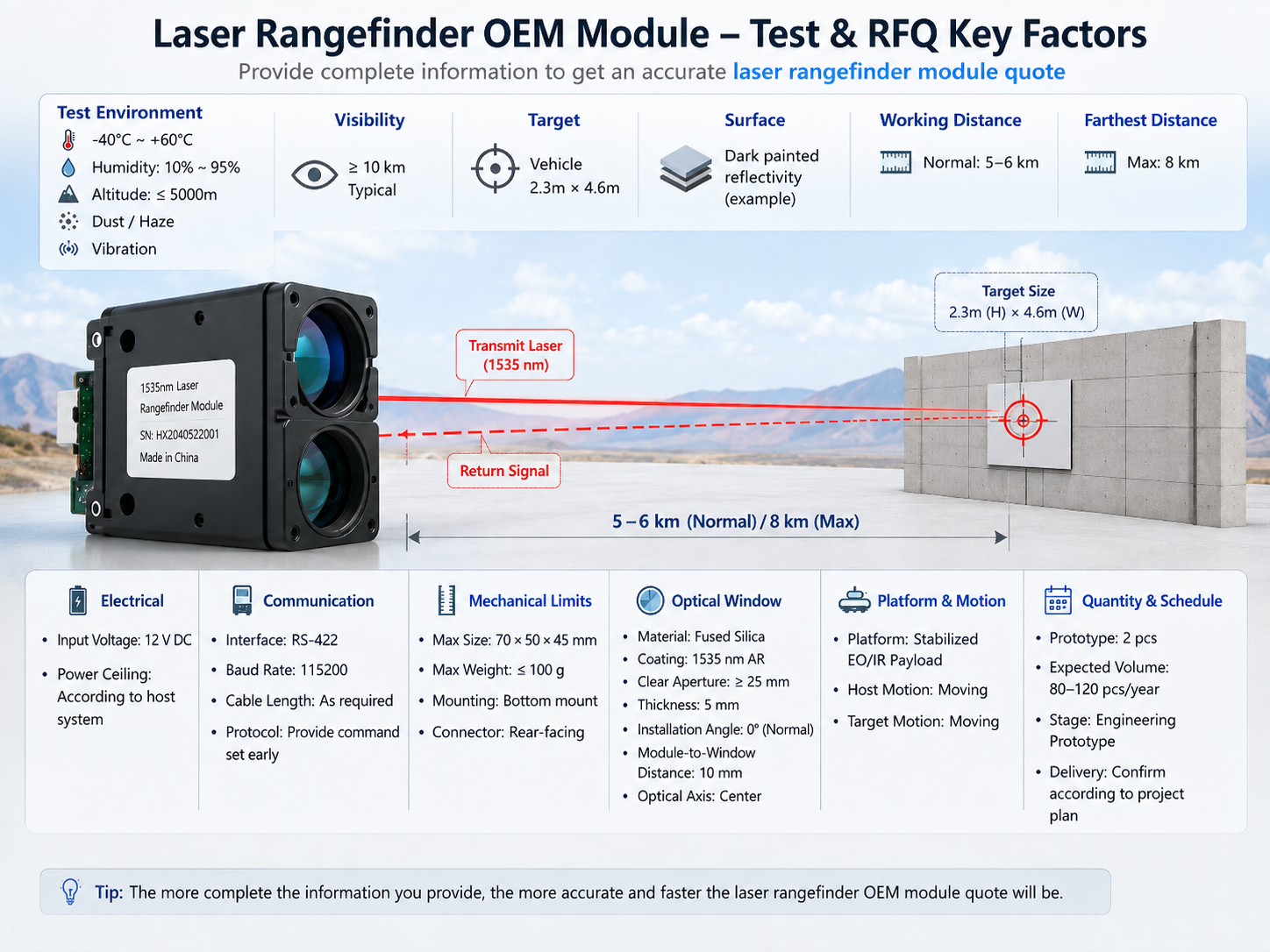
What to Provide When Requesting a Laser Rangefinder OEM Module Quote
Learn what information to provide when requesting a laser rangefinder OEM module quote, including target type, working distance, visibility, power, communication, mechanical limits, optical window details, quantity, and delivery requirements.
How to Choose a Compact Laser Rangefinder Module for EO/IR Integration
Choosing a compact laser rangefinder module for an EO/IR system involves more than checking maximum ranging distance. This guide covers size, weight, 1535 nm wavelength, beam divergence, power, TTL/RS-422 communication, optical windows, target conditions and UAV payload integration to help engineers select a suitable module for real applications.
How Target Size, Reflectivity and Visibility Affect Laser Ranging Distance
Learn how target size, surface reflectivity and atmospheric visibility can change laser ranging distance. This guide explains why maximum range depends on real target and environmental conditions, helping users choose a more suitable laser rangefinder module.

How to Select a 3–20 km Laser Rangefinder Module
Choosing the right laser rangefinder module involves more than comparing maximum range. This guide explains how to select 3–20 km modules based on target size, reflectivity, visibility, beam divergence, accuracy, power, weight, interfaces, and platform requirements for EO/IR and other optoelectronic systems.
Non-Disclosure Agreement (NDA):We respect your proprietary system designs. Huanxin is glad to sign a mutual NDA before receiving detailed payload drawings or project specifications.